In B2B manufacturing, speed to information has become a competitive advantage. Reps and dealers expect accurate answers instantly. Customers want to help themselves instead of waiting for a call back. And customer service teams are often overwhelmed, not by rare edge cases, but by high volume repeatable requests.
This is especially true in furnishings, the builders market, and kitchen and bath. Catalogs are deep. Options and configurations multiply. Pricing is customer specific. Documents and assets matter. And the channel often includes a mix of reps, dealers, designers, and trade partners who all need quick access to the same information to sell and support projects.
The Shift: Digital is About Service Enablement First, Not Carts First
Many manufacturers do not start digital transformation with “we need eCommerce.” They start with “we need our reps and customers to find what they need without calling us.”
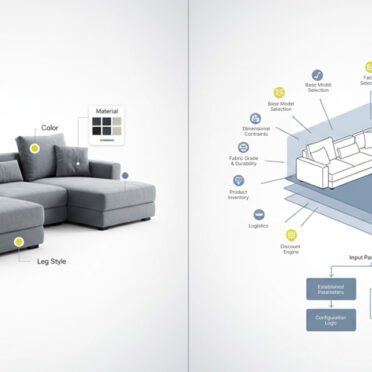
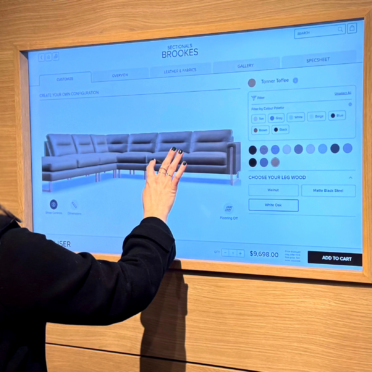
That might mean a product finder, a configurator, and a spec and installation library. It might include quote workflows, replacement parts, and portals that show customer-specific assortments and pricing. And increasingly, it includes post purchase self serve tools such as shipment tracking, open order visibility, and access to invoices and account history.
These are the experiences that reduce friction, improve channel satisfaction, and remove pressure from customer service. When the information is easy to find and trusted, adoption follows. And as adoption grows, manufacturers begin to feel the compounding benefits: fewer calls, faster quoting, more consistent selling, stronger partner loyalty, and better operational focus.
Why PWA Matters for Adoption Across Reps, Dealers, and Job Sites
Mobile usage is not just a consumer trend. In these industries, many users spend the day on the move. Reps are traveling, dealers are on the floor, installers are in the field, and project teams are coordinating between trades. They rely on phones and tablets to answer questions quickly.
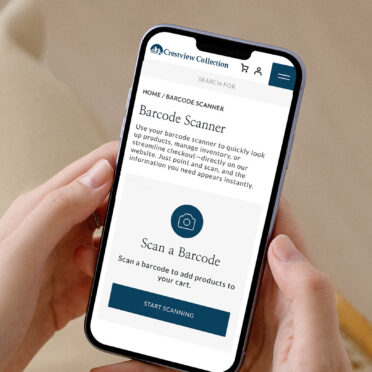
If the online experience is slow or difficult on mobile, users fall back to email and phone. A Progressive Web App, or PWA, helps close that gap by delivering an app-like experience directly in the browser that is fast and responsive, even on inconsistent networks.
On Adobe Commerce, PWA Studio, built around the Venia reference storefront, provides a proven framework while Adobe Commerce remains the system of record for catalog, pricing, promotions, cart and checkout, and orders. PWA Studio separates the storefront from the Adobe Commerce engine and connects to it through GraphQL APIs. This reduces dependency on the traditional theme layer and allows the experience to evolve more quickly while the commerce foundation remains stable.
What This Enables for IT and Marketing Teams
For IT teams, a decoupled storefront typically means clearer separation of responsibilities. Front end improvements can be developed and released independently from core commerce releases, which reduces risk and helps teams deliver improvements continuously. It also supports modern performance techniques such as optimized rendering, intelligent caching, and efficient data delivery.
For marketing and digital teams, the benefit is speed and flexibility. Merchandising and content experiences can be improved faster without being boxed into traditional theme constraints. When the experience is faster and easier to use, engagement improves, SEO signals improve, and users are more likely to complete high intent tasks.
Why Manufacturers Need an Industry Specific Approach
The reality is that B2B manufacturing workflows are not generic. A manufacturer selling configurable products, large assortments, and variation heavy catalogs needs experiences that are built for that complexity. The biggest gains come from self serve tools that match real day-to-day workflows and present information in a way that is intuitive for the channel.
At Jola, we have invested in evolving PWA Studio for manufacturers in furnishings, the builders market, and kitchen and bath. Combined with our library of industry components and extensions, this approach supports complex assortments, high variation products, and information heavy workflows that reps, dealers, and customers rely on.
The goal is practical: get accurate information to the field faster, reduce repetitive service workload, and help manufacturers evolve toward a digital first operating model as they see the benefits and adoption grow.
A Simple Readiness Question
If you are evaluating a self serve portal, here is a useful starting point. What percentage of your daily inquiries could be handled through a fast, well designed online experience, without losing the personal touch where it matters?
When manufacturers start there, the roadmap becomes clearer. Build the highest impact self serve tools first. Enable the channel. Reduce friction. Then expand into deeper workflows like quoting, ordering, configuration, and post purchase service.

MOST POPULAR